Weather Forecast for:
Abbotsford Airport

Updated: May 18, 2013 at 12:01 AM

Fri PM
May 17

 
Low: 11 ºC
 

Sat
May 18

High: 15 ºC
Low: 10 ºC
 

Sun
May 19

High: 19 ºC


Mon
May 20

High: 19 ºC
Low: 9 ºC
 

Tue
May 21

High: 14 ºC
Low: 8 ºC


Arthropods of Canadian Grasslands - Volume 1: Ecology and Interactions in Grassland Habitats

This authoritative book is the first of a planned three volume series on Canada’s grassland arthropods. Targeting a broad audience, chapters review the biotic and abiotic attributes of different types of grasslands in Canada, and select grassland habitats and their associated arthropods. Publication of the series is intended to increase awareness of Canada’s vanishing grasslands, the rich diversity of arthropods that they support, and to provide a baseline reference for future studies in these fascinating environments.

Read Full Story Here

May UPDATE to Manure Spreading Advisory #2

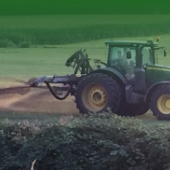
Well planned manure applications are acceptable on most fields that are seeded, will be seeded within two weeks, and/or well-established grasses. It is recommended that you plan manure applications to meet the crop nutrient requirements throughout the growing season and ensure storage facilities are as close to empty as possible by next fall. It is the producer’s responsibility to apply manure in a manner that will not create runoff to surface water, to off-field locations, and/or leaching below the root zone. Do not apply manure prior to significant rain events or on wet or saturated fields. Maintain a minimum buffer distance of 5 meters from wet watercourses and ditches or 3 meters from dry watercourses and ditches during summer. Refer to Manure Spreading Advisory #2 (released April 2, 2013) for more information.

Read Full Story Here

Arthropods of Canadian Grasslands - Volume 2: Inhabitants of a Changing Landscape

Grasslands were once a dominant feature of Canada's landscape, extending across most of southern Alberta, Saskatchewan and Manitoba, with smaller expanses in the Yukon, the interior of British Columbia, and in eastern Ontario. Now, virtually all of these grasslands have been extensively modified for agricultural production with only scattered patches left undisturbed. Our current knowledge of grassland arthropods largely is limited to species of economic importance; usually exotic species or native species that have become agricultural pests. There exists relatively little information on the arthropods of native grasslands, such that we know little about their biodiversity, their role in ecosystems, and their ability to respond to habitat change.

Read Full Story Here

Beetles Help Degrade Dung on Canadian Pastures (2012)

It can take hours, days or weeks for dung-breeding beetles to scatter or bury cow pies deposited on pastures. Much depends on the number and species of beetles at hand – and they have a lot of work to do. A cow can deposit up to 22 kg of fresh dung each day throughout the grazing season, and Canada has a national herd of about 14 million animals. The tireless efforts of these beetles in degrading cattle dung provide huge returns to Canada’s ranchers. Undegraded dung reduces the amount of pasture available for grazing, provides breeding sites for pests of cattle, and removes nitrogen and minerals from pasture soils. Through their feeding and tunneling activities, dung-breeding insects hasten the return of organic matter from the pat back into the soil to increase forage yields, increase soil aeration and water retention, remove breeding sites for livestock pests, and generally improve the aesthetic value of the countryside.

Read Full Story Here

Manure Spreading Advisory #2 for 2013: South Coast Region

Well planned manure applications are acceptable on most fields that are seeded, will be seeded within two weeks, and/or well-established grasses. Avoid manure applications on wet fields and/or saturated soils. It is the producer’s responsibility to apply manure in a manner that will not create runoff to surface water, to off field locations, and/or leaching below the root zone. Do not apply manure prior to significant rain events. Continue to check your storage areas to ensure you have enough manure storage to hold the average expected precipitation plus account for any potential increased storage circumstances such as excessive precipitation. Please read the entire advisory for details and important information to assist in the decision-making process for manure application(s) and storage.

Read Full Story Here

Manure Spreading Advisory #1 for 2013: South Coast Region

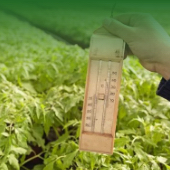
It is acceptable to apply manure on established grasses, fields being seeded within two weeks of application, and berry fields if: ­ T-Sum values are greater than 200, soil temperature is greater than 5oC, ­crop is actively growing (for established crops only), and ­ expected precipitation and manure applications will not create runoff to surface water, to off field locations, and/or leaching below the root zone. Please continue to check your storage areas to ensure you have enough manure storage to hold the average expected precipitation plus account for any potential increased storage circumstances such as excessive precipitation. • Field stored solid agricultural wastes (except agricultural vegetation waste) MUST be COVERED from October 1 to April 1, inclusive. Please read the entire advisory for details and important information to assist in the decision-making process for manure application(s) and storage.

Read Full Story Here

EU says pesticides linked to bee decline should be restricted (2013)

The European Commission has proposed that member states restrict the use of certain classes of pesticide that are believed to be harmful to bees. Sprays that use neonicotinoid chemicals should only be used on crops that are not attractive to the insects they said. The sale of seeds treated with these chemicals should also be prohibited. Earlier this month, the European Food Safety Authority (Efsa) issued guidance on the use of neonicotinoids, in which they recognised "high acute risks" to bees who encountered residue from these sprays in pollen and nectar in crops like oilseed rape and sunflowers. They also said there were risks to bees from dust in crops like maize that had been sprayed with these pesticides.

Read Full Story Here

Corn Producers Can Take Steps towards Reducing Risk to Pollinators (2012)

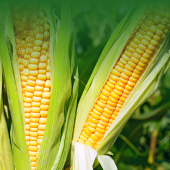
In the spring of 2012, coinciding with corn planting, there were approximately 200 incidences of what was likely acute poisoning of honey bees in Ontario. Many factors may have contributed to these incidences. Environmental conditions and planting practices during the 2012 planting season may play a significant role. Unfortunately, without being present in each field at the time of planting to collect data, there may never be conclusive evidence as to route(s) of exposure to bees. One of the more likely routes is dust. Research from Purdue University and other jurisdictions in Europe have found evidence that dust coming from the exhaust of high pressure air‐assisted corn planters contained particles of seed insecticides. Recommendations to avoid incidents where planting treated seed that could cause problems for bees include many best management practices: 1. strengthen communication with local beekeepers; 2. time of planting; 3. manage dandelions and other flowering weeds in and around fields, prior to planting; 4. minimize the amount of insecticide seed treatment used; 5. limit the amount of seed lubricant (e.g. talc) used at planting; 6. exhaust dust towards the center of the field; and 7. modifying planters with deflectors. NOTE: Any suspected bee kill incidents in B.C. should be reported to: Paul VanWestendorp, BC Provincial Apiculturist.

Read Full Story Here

Ontario Bee Incidents Update (2012)

Last spring, beginning in April 2012, incidents of bee mortality were reported by beekeepers across southern Ontario. Timing and location of these incidents appears to have generally coincided with corn planting. Samples of affected bees were taken at many incident locations and are being analyzed for specific pesticide residues. Preliminary residue results show that insecticides used to treat corn seed were detected in approximately 70% of the dead bee samples analyzed. Based on the preliminary information evaluated to date, there is an indication that pesticides used on treated corn seeds may have contributed to at least some of the 2012 spring bee losses that occurred in Ontario, however, there is still additional information being collected for consideration and final conclusions have not been made.

Read Full Story Here

BC Corn Hybrid Trials 2012 Yield Results

The Pacific Field Corn Association's Hybrid Evaluation Program has released the 2012 data results. See data from Abbotsford (early), Agassiz (late) and Enderby (Interior) plus long-term averages from each location.

Read Full Story Here

Pages